
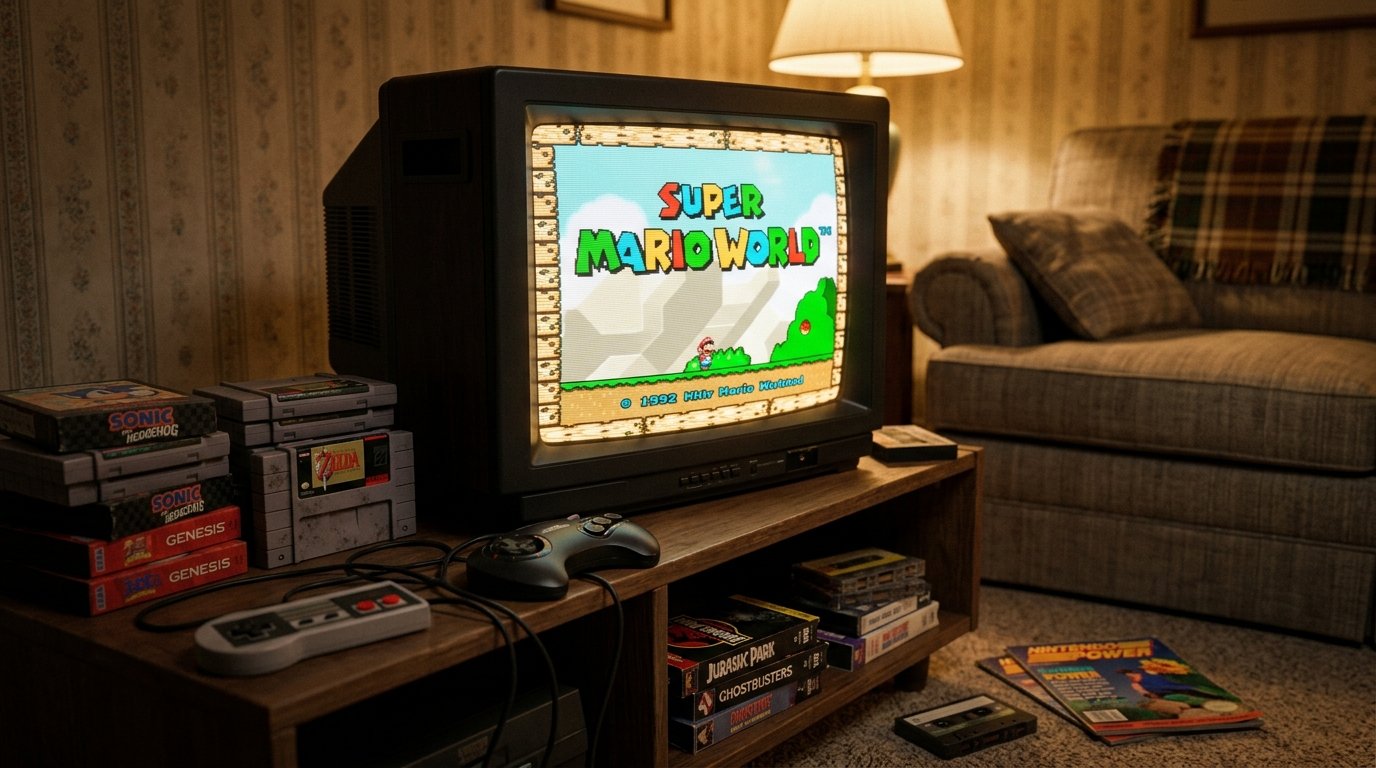
Top Retro Games That Define Nostalgia

Nostalgia is a powerful force, and nothing triggers it quite like the 8-bit chiptunes and pixelated graphics of retro arcade games. These early titles laid the foundation for the multi-billion dollar industry we know today. From the dimly lit arcades of the 1980s to modern browser-based remakes, games like Pac-Man, Tetris, and Space Invaders have secured their place in cultural history. In this article, we explore the origins of these masterpieces, their enduring mechanics, and why they remain relevant in the modern era. This aspect of the gaming industry continues to evolve rapidly, pushing the boundaries of what is possible within a web browser. Developers are constantly optimizing rendering pipelines, enhancing input latency, and refining the user experience. As a result, players enjoy unprecedented access to high-quality entertainment without the traditional barriers of entry. The intersection of art, technology, and game design creates a dynamic ecosystem where innovation thrives. Whether analyzing algorithmic efficiency, visual aesthetics, or player psychology, the depth of casual gaming is truly remarkable. Moving forward, the integration of advanced web APIs will only further blur the lines between native and browser-based experiences, heralding a new era of accessible, ubiquitous gaming for all demographics. This aspect of the gaming industry continues to evolve rapidly, pushing the boundaries of what is possible within a web browser. Developers are constantly optimizing rendering pipelines, enhancing input latency, and refining the user experience. As a result, players enjoy unprecedented access to high-quality entertainment without the traditional barriers of entry. The intersection of art, technology, and game design creates a dynamic ecosystem where innovation thrives. Whether analyzing algorithmic efficiency, visual aesthetics, or player psychology, the depth of casual gaming is truly remarkable. Moving forward, the integration of advanced web APIs will only further blur the lines between native and browser-based experiences, heralding a new era of accessible, ubiquitous gaming for all demographics.

The Pioneers: Pong (1972) and Space Invaders (1978)

The commercial video game industry effectively began with Pong. Its simple, tennis-like mechanics proved that interactive digital entertainment was commercially viable, launching Atari into the stratosphere. This aspect of the gaming industry continues to evolve rapidly, pushing the boundaries of what is possible within a web browser. Developers are constantly optimizing rendering pipelines, enhancing input latency, and refining the user experience. As a result, players enjoy unprecedented access to high-quality entertainment without the traditional barriers of entry. The intersection of art, technology, and game design creates a dynamic ecosystem where innovation thrives. Whether analyzing algorithmic efficiency, visual aesthetics, or player psychology, the depth of casual gaming is truly remarkable. Moving forward, the integration of advanced web APIs will only further blur the lines between native and browser-based experiences, heralding a new era of accessible, ubiquitous gaming for all demographics. This aspect of the gaming industry continues to evolve rapidly, pushing the boundaries of what is possible within a web browser. Developers are constantly optimizing rendering pipelines, enhancing input latency, and refining the user experience. As a result, players enjoy unprecedented access to high-quality entertainment without the traditional barriers of entry. The intersection of art, technology, and game design creates a dynamic ecosystem where innovation thrives. Whether analyzing algorithmic efficiency, visual aesthetics, or player psychology, the depth of casual gaming is truly remarkable. Moving forward, the integration of advanced web APIs will only further blur the lines between native and browser-based experiences, heralding a new era of accessible, ubiquitous gaming for all demographics.

A few years later, Space Invaders introduced the concept of a high score and scaling difficulty as alien ships descended faster. It caused a reported coin shortage in Japan and established the 'shoot 'em up' genre, forever changing arcade culture. This aspect of the gaming industry continues to evolve rapidly, pushing the boundaries of what is possible within a web browser. Developers are constantly optimizing rendering pipelines, enhancing input latency, and refining the user experience. As a result, players enjoy unprecedented access to high-quality entertainment without the traditional barriers of entry. The intersection of art, technology, and game design creates a dynamic ecosystem where innovation thrives. Whether analyzing algorithmic efficiency, visual aesthetics, or player psychology, the depth of casual gaming is truly remarkable. Moving forward, the integration of advanced web APIs will only further blur the lines between native and browser-based experiences, heralding a new era of accessible, ubiquitous gaming for all demographics. This aspect of the gaming industry continues to evolve rapidly, pushing the boundaries of what is possible within a web browser. Developers are constantly optimizing rendering pipelines, enhancing input latency, and refining the user experience. As a result, players enjoy unprecedented access to high-quality entertainment without the traditional barriers of entry. The intersection of art, technology, and game design creates a dynamic ecosystem where innovation thrives. Whether analyzing algorithmic efficiency, visual aesthetics, or player psychology, the depth of casual gaming is truly remarkable. Moving forward, the integration of advanced web APIs will only further blur the lines between native and browser-based experiences, heralding a new era of accessible, ubiquitous gaming for all demographics.

The Golden Age: Pac-Man (1980) and Tetris (1984)

Pac-Man broadened gaming's appeal beyond space shooters, introducing character-driven design, maze navigation, and AI 'ghosts' with distinct personalities. It became a global merchandising phenomenon. This aspect of the gaming industry continues to evolve rapidly, pushing the boundaries of what is possible within a web browser. Developers are constantly optimizing rendering pipelines, enhancing input latency, and refining the user experience. As a result, players enjoy unprecedented access to high-quality entertainment without the traditional barriers of entry. The intersection of art, technology, and game design creates a dynamic ecosystem where innovation thrives. Whether analyzing algorithmic efficiency, visual aesthetics, or player psychology, the depth of casual gaming is truly remarkable. Moving forward, the integration of advanced web APIs will only further blur the lines between native and browser-based experiences, heralding a new era of accessible, ubiquitous gaming for all demographics. This aspect of the gaming industry continues to evolve rapidly, pushing the boundaries of what is possible within a web browser. Developers are constantly optimizing rendering pipelines, enhancing input latency, and refining the user experience. As a result, players enjoy unprecedented access to high-quality entertainment without the traditional barriers of entry. The intersection of art, technology, and game design creates a dynamic ecosystem where innovation thrives. Whether analyzing algorithmic efficiency, visual aesthetics, or player psychology, the depth of casual gaming is truly remarkable. Moving forward, the integration of advanced web APIs will only further blur the lines between native and browser-based experiences, heralding a new era of accessible, ubiquitous gaming for all demographics.

Tetris, created by Alexey Pajitnov, is arguably the most perfect puzzle game ever designed. Its universal appeal lies in its spatial challenge and the deep psychological satisfaction of clearing lines. This aspect of the gaming industry continues to evolve rapidly, pushing the boundaries of what is possible within a web browser. Developers are constantly optimizing rendering pipelines, enhancing input latency, and refining the user experience. As a result, players enjoy unprecedented access to high-quality entertainment without the traditional barriers of entry. The intersection of art, technology, and game design creates a dynamic ecosystem where innovation thrives. Whether analyzing algorithmic efficiency, visual aesthetics, or player psychology, the depth of casual gaming is truly remarkable. Moving forward, the integration of advanced web APIs will only further blur the lines between native and browser-based experiences, heralding a new era of accessible, ubiquitous gaming for all demographics. This aspect of the gaming industry continues to evolve rapidly, pushing the boundaries of what is possible within a web browser. Developers are constantly optimizing rendering pipelines, enhancing input latency, and refining the user experience. As a result, players enjoy unprecedented access to high-quality entertainment without the traditional barriers of entry. The intersection of art, technology, and game design creates a dynamic ecosystem where innovation thrives. Whether analyzing algorithmic efficiency, visual aesthetics, or player psychology, the depth of casual gaming is truly remarkable. Moving forward, the integration of advanced web APIs will only further blur the lines between native and browser-based experiences, heralding a new era of accessible, ubiquitous gaming for all demographics.

The Shift to 3D: Doom (1993)

While 2D arcade games ruled the 80s, Doom's release in 1993 was a paradigm shift. It popularized the First-Person Shooter (FPS) genre and introduced networked multiplayer on a massive scale.

Doom's shareware distribution model and modding community (WADs) set standard practices that modern indie and AAA developers still utilize today.

Cultural Impact and Enduring Legacy

These games didn't just entertain; they shaped pop culture. They influenced movies, music, and fashion, cementing a retro aesthetic that continues to be heavily referenced.

Their mechanics are so fundamentally sound that they are still taught in game design courses today as masterclasses in player feedback, difficulty curves, and visual clarity.

Modern Browser Remakes and Preservation

Today, preserving these classics is critical. Thanks to HTML5 and JavaScript, perfect recreations and spiritual successors are playable instantly in web browsers.

Platforms like Movuter Arcade ensure that new generations can experience the pure, distilled gameplay loops of the past, updated with smooth canvas rendering and zero installation friction.

Key Takeaways

Frequently Asked Questions

Q: Why are old games so hard?

A: Arcade games were designed to be challenging to encourage players to insert more coins, a design philosophy called 'Quarter Eating'.

Q: What makes Tetris so addictive?

A: It taps into the 'Zeigarnik effect', a psychological principle where uncompleted tasks (uncleared lines) stick in your memory, compelling you to finish them.

Q: Are modern browser versions exactly the same?

A: They often feature quality-of-life improvements like smoother framerates and responsive controls while maintaining the core logic.

Q: What was the first video game ever?

A: While debated, 'Tennis for Two' (1958) and 'Spacewar!' (1962) predate Pong as the earliest digital interactive games.

Play Related Games on Movuter Arcade

If you enjoyed this deep dive, put your skills to the test right here on Movuter Arcade. Experience the thrill of instant gameplay with our highly optimized HTML5 titles. Dive into the action now: Play Pac-Man, Play Tetris, and Play Pong.

Alex Morgan

Alex Morgan

Retro Gaming Historian

Alex documents the evolution of arcade cabinets and the enduring legacy of 8-bit game design.