
Mobile vs Browser Gaming: The Full Comparison

The debate between mobile gaming and browser-based gaming has raged on for years, evolving as technology advances. Today, casual gamers are faced with a choice between downloading a dedicated app or playing directly in their web browser. This choice impacts everything from device storage to gameplay performance. As HTML5 and WebGL mature, the browser is becoming a powerhouse platform that rivals native mobile apps. This aspect of the gaming industry continues to evolve rapidly, pushing the boundaries of what is possible within a web browser. Developers are constantly optimizing rendering pipelines, enhancing input latency, and refining the user experience. As a result, players enjoy unprecedented access to high-quality entertainment without the traditional barriers of entry. The intersection of art, technology, and game design creates a dynamic ecosystem where innovation thrives. Whether analyzing algorithmic efficiency, visual aesthetics, or player psychology, the depth of casual gaming is truly remarkable. Moving forward, the integration of advanced web APIs will only further blur the lines between native and browser-based experiences, heralding a new era of accessible, ubiquitous gaming for all demographics. This aspect of the gaming industry continues to evolve rapidly, pushing the boundaries of what is possible within a web browser. Developers are constantly optimizing rendering pipelines, enhancing input latency, and refining the user experience. As a result, players enjoy unprecedented access to high-quality entertainment without the traditional barriers of entry. The intersection of art, technology, and game design creates a dynamic ecosystem where innovation thrives. Whether analyzing algorithmic efficiency, visual aesthetics, or player psychology, the depth of casual gaming is truly remarkable. Moving forward, the integration of advanced web APIs will only further blur the lines between native and browser-based experiences, heralding a new era of accessible, ubiquitous gaming for all demographics.

Performance Benchmarks and Loading Times

When comparing mobile apps to browser games, performance benchmarks reveal fascinating differences. Native mobile apps generally have the edge in raw computational power, utilizing the device's hardware directly. This allows for complex 3D rendering and heavy physics simulations. However, browser games have made staggering leaps thanks to WebAssembly and advanced JavaScript engines. This aspect of the gaming industry continues to evolve rapidly, pushing the boundaries of what is possible within a web browser. Developers are constantly optimizing rendering pipelines, enhancing input latency, and refining the user experience. As a result, players enjoy unprecedented access to high-quality entertainment without the traditional barriers of entry. The intersection of art, technology, and game design creates a dynamic ecosystem where innovation thrives. Whether analyzing algorithmic efficiency, visual aesthetics, or player psychology, the depth of casual gaming is truly remarkable. Moving forward, the integration of advanced web APIs will only further blur the lines between native and browser-based experiences, heralding a new era of accessible, ubiquitous gaming for all demographics. This aspect of the gaming industry continues to evolve rapidly, pushing the boundaries of what is possible within a web browser. Developers are constantly optimizing rendering pipelines, enhancing input latency, and refining the user experience. As a result, players enjoy unprecedented access to high-quality entertainment without the traditional barriers of entry. The intersection of art, technology, and game design creates a dynamic ecosystem where innovation thrives. Whether analyzing algorithmic efficiency, visual aesthetics, or player psychology, the depth of casual gaming is truly remarkable. Moving forward, the integration of advanced web APIs will only further blur the lines between native and browser-based experiences, heralding a new era of accessible, ubiquitous gaming for all demographics.

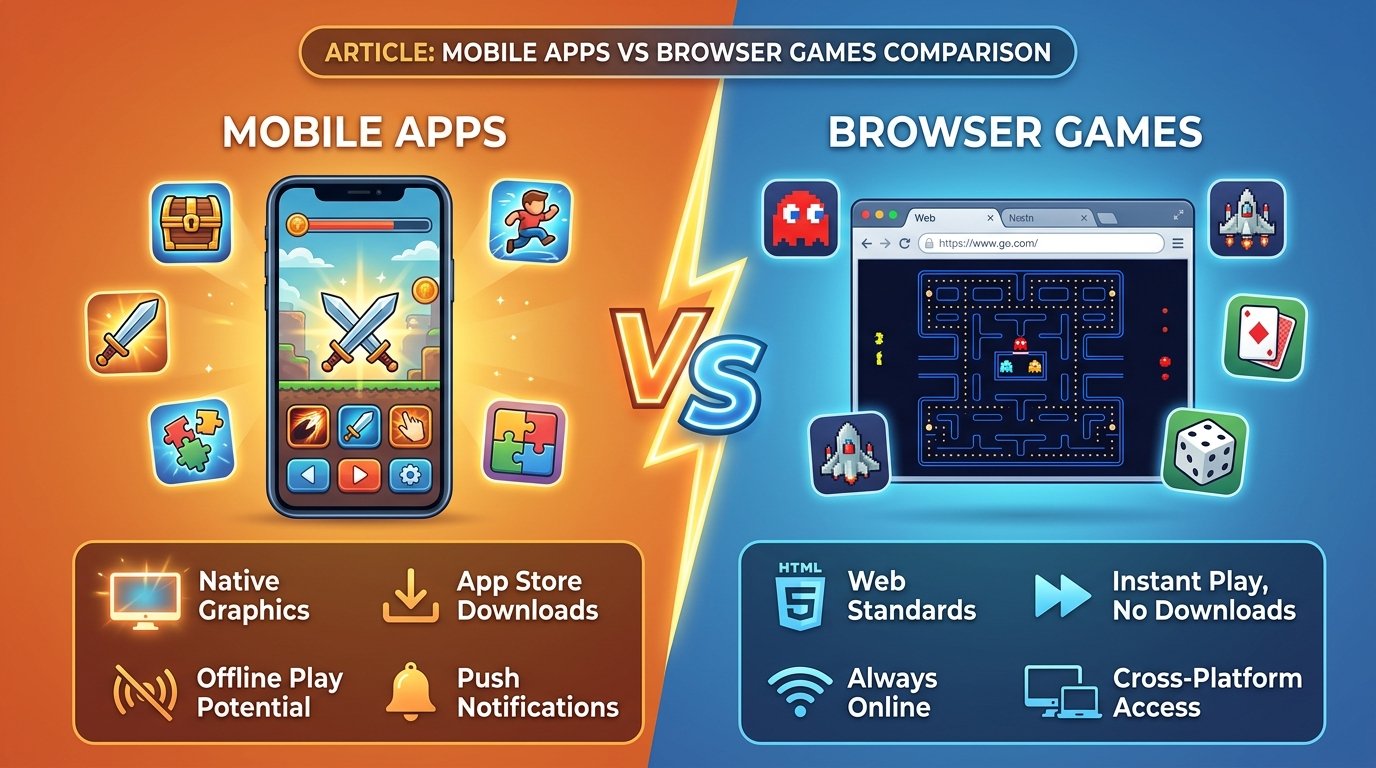
The most significant advantage of browser games lies in their loading times. A native app requires visiting an app store, downloading a file that can range from fifty megabytes to several gigabytes, and waiting for installation. In contrast, a browser game like those on Movuter Arcade loads in under a second. You simply click a link, and the game is ready to play. This aspect of the gaming industry continues to evolve rapidly, pushing the boundaries of what is possible within a web browser. Developers are constantly optimizing rendering pipelines, enhancing input latency, and refining the user experience. As a result, players enjoy unprecedented access to high-quality entertainment without the traditional barriers of entry. The intersection of art, technology, and game design creates a dynamic ecosystem where innovation thrives. Whether analyzing algorithmic efficiency, visual aesthetics, or player psychology, the depth of casual gaming is truly remarkable. Moving forward, the integration of advanced web APIs will only further blur the lines between native and browser-based experiences, heralding a new era of accessible, ubiquitous gaming for all demographics. This aspect of the gaming industry continues to evolve rapidly, pushing the boundaries of what is possible within a web browser. Developers are constantly optimizing rendering pipelines, enhancing input latency, and refining the user experience. As a result, players enjoy unprecedented access to high-quality entertainment without the traditional barriers of entry. The intersection of art, technology, and game design creates a dynamic ecosystem where innovation thrives. Whether analyzing algorithmic efficiency, visual aesthetics, or player psychology, the depth of casual gaming is truly remarkable. Moving forward, the integration of advanced web APIs will only further blur the lines between native and browser-based experiences, heralding a new era of accessible, ubiquitous gaming for all demographics.

Control Schemes: Touch Interfaces vs. Keyboard Inputs

Control mechanisms define the player experience, and this is where mobile and browser games diverge significantly. Mobile games are inherently designed for touch interfaces. They rely on taps, swipes, and virtual joysticks. This aspect of the gaming industry continues to evolve rapidly, pushing the boundaries of what is possible within a web browser. Developers are constantly optimizing rendering pipelines, enhancing input latency, and refining the user experience. As a result, players enjoy unprecedented access to high-quality entertainment without the traditional barriers of entry. The intersection of art, technology, and game design creates a dynamic ecosystem where innovation thrives. Whether analyzing algorithmic efficiency, visual aesthetics, or player psychology, the depth of casual gaming is truly remarkable. Moving forward, the integration of advanced web APIs will only further blur the lines between native and browser-based experiences, heralding a new era of accessible, ubiquitous gaming for all demographics. This aspect of the gaming industry continues to evolve rapidly, pushing the boundaries of what is possible within a web browser. Developers are constantly optimizing rendering pipelines, enhancing input latency, and refining the user experience. As a result, players enjoy unprecedented access to high-quality entertainment without the traditional barriers of entry. The intersection of art, technology, and game design creates a dynamic ecosystem where innovation thrives. Whether analyzing algorithmic efficiency, visual aesthetics, or player psychology, the depth of casual gaming is truly remarkable. Moving forward, the integration of advanced web APIs will only further blur the lines between native and browser-based experiences, heralding a new era of accessible, ubiquitous gaming for all demographics.

Browser games, especially when played on a desktop or laptop, leverage the tactile feedback of physical keyboards and mice. This offers unparalleled precision for games that require quick, accurate inputs. However, the landscape is blending. Many browser games are now fully responsive, offering touch controls when accessed via a mobile browser. This aspect of the gaming industry continues to evolve rapidly, pushing the boundaries of what is possible within a web browser. Developers are constantly optimizing rendering pipelines, enhancing input latency, and refining the user experience. As a result, players enjoy unprecedented access to high-quality entertainment without the traditional barriers of entry. The intersection of art, technology, and game design creates a dynamic ecosystem where innovation thrives. Whether analyzing algorithmic efficiency, visual aesthetics, or player psychology, the depth of casual gaming is truly remarkable. Moving forward, the integration of advanced web APIs will only further blur the lines between native and browser-based experiences, heralding a new era of accessible, ubiquitous gaming for all demographics. This aspect of the gaming industry continues to evolve rapidly, pushing the boundaries of what is possible within a web browser. Developers are constantly optimizing rendering pipelines, enhancing input latency, and refining the user experience. As a result, players enjoy unprecedented access to high-quality entertainment without the traditional barriers of entry. The intersection of art, technology, and game design creates a dynamic ecosystem where innovation thrives. Whether analyzing algorithmic efficiency, visual aesthetics, or player psychology, the depth of casual gaming is truly remarkable. Moving forward, the integration of advanced web APIs will only further blur the lines between native and browser-based experiences, heralding a new era of accessible, ubiquitous gaming for all demographics.

Game Library Depth

The depth of game libraries on both platforms is staggering, but they are curated differently. App stores are flooded with millions of titles, making discoverability difficult.

The browser ecosystem is more decentralized, allowing niche portals like Movuter Arcade to curate specific, high-quality experiences without the gatekeeping of major app stores.

Monetization Models Comparison

Mobile apps are notorious for aggressive monetization strategies, including intrusive video ads, stamina systems, and predatory microtransactions.

Browser games are more likely to offer a completely free experience without artificial time-gating, making them highly appealing for uninterrupted casual play.

Offline Capability, Platform Fragmentation, and WebGL

Platform fragmentation is a massive headache for mobile developers. Browser gaming elegantly solves this issue through HTML5, Canvas, and WebGL standardization.

Furthermore, the introduction of Progressive Web Apps (PWAs) allows modern browser games to cache assets locally, enabling full offline playability.

Key Takeaways

Frequently Asked Questions

Q: Do browser games drain battery as fast as mobile apps?

A: Generally, simple 2D HTML5 browser games consume less battery than heavy 3D native mobile apps.

Q: Can I play browser games offline?

A: Yes, many modern browser games utilize Service Workers to cache assets for offline play.

Q: Are browser games safer than downloading apps?

A: Browser games run within the browser's sandbox environment, making them inherently safer.

Q: Will browser games ever match AAA mobile graphics?

A: With WebGPU, browser games are getting closer to native performance levels.

Play Related Games on Movuter Arcade

If you enjoyed this deep dive, put your skills to the test right here on Movuter Arcade. Experience the thrill of instant gameplay with our highly optimized HTML5 titles. Dive into the action now: Play Flappy Bird, Play Snake, and Play Dino Run.

Sarah Chen

Sarah Chen

Platform Engineer

Sarah is a seasoned web developer specializing in HTML5 canvas optimization and cross-platform performance.