May 06, 2026

Designing Addictive Casual Games

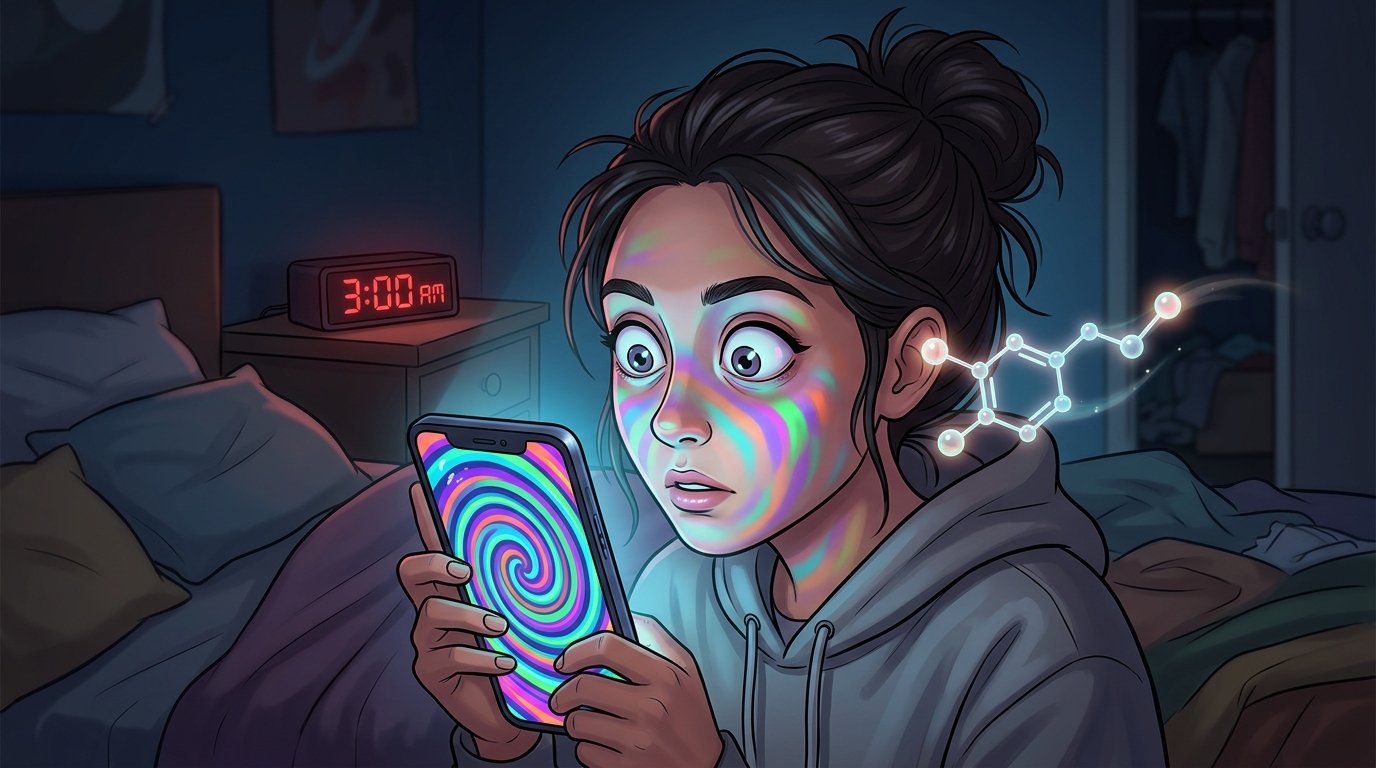
Have you ever intended to play a quick mobile or browser game for just five minutes, only to look up and realize an hour has passed? This phenomenon is not an accident. The most successful casual games are meticulously engineered using established psychological principles. Behind the brightly colored sprites, simple one-touch controls, and satisfying sound effects lies a deeply calculated architecture designed to captivate the human brain. From the precise calibration of the difficulty curve to the strategic deployment of variable rewards, casual game design is a masterclass in behavioral psychology. In this article, we will unpack the specific mechanics and theories that game developers use to craft experiences that are nearly impossible to put down.

Flow State Theory (Csikszentmihalyi)

At the core of addictive game design is the concept of "Flow," a psychological state identified by Mihaly Csikszentmihalyi. Flow is characterized by complete absorption in an activity, a loss of the sense of time, and profound satisfaction. To induce flow, a game must constantly balance two variables: the challenge presented by the game and the skill level of the player. If the game is too difficult relative to the player's skill, the result is anxiety and frustration. If the game is too easy, the result is boredom.

Masterful casual games navigate this narrow corridor perfectly. They start incredibly simple, allowing the player to feel a sense of immediate competence. As the player's mechanical skill improves—perhaps they learn to tap faster or anticipate obstacles better—the game responds by incrementally raising the difficulty. This dynamic scaling keeps the player hovering in the "flow channel." When a player is in this state, the cognitive load is perfectly optimized; they aren't overthinking, they are simply doing, driven entirely by intrinsic motivation.

Feedback Loop Design

A game is essentially a continuous feedback loop: the player performs an action, the game processes that action, and the game outputs a result. In addictive casual games, this loop is incredibly tight and visceral. When you slice a target or stack a block perfectly, the game doesn't just quietly register the points. It explodes with visual confetti, triggers a triumphant, high-pitched chime, and perhaps even utilizes screen shake to convey impact.

This sensory overload is known as "juiciness" in game design. The immediate, exaggerated feedback serves to validate the player's action instantly. It assures the brain that the physical input (a tap or a swipe) had a meaningful and powerful consequence in the digital world. Over time, the brain begins to crave this sensory validation. The tighter the feedback loop—meaning the shorter the delay between input and spectacular output—the more compelling the core gameplay loop becomes.

Difficulty Curve Calibration

While the overall trajectory of a game's difficulty must go up to maintain flow, a straight diagonal line is actually poor design. The most addictive games utilize a "sawtooth" difficulty curve. The difficulty ramps up steadily, presenting a significant challenge (a boss level or a particularly fast sequence) that tests the limits of the player's newly acquired skills. Once the player overcomes this peak, the difficulty actually drops slightly for the next phase.

This post-peak valley allows the player a moment of rest and an opportunity to feel undeniably powerful. They can easily crush the early stages of the next loop using the advanced skills they were forced to learn during the peak. This oscillation between intense focus (stress) and empowered dominance (relief) prevents mental burnout. It creates a rhythmic pacing that encourages the player to push through frustration, knowing that a period of satisfying ease awaits them on the other side of the challenge.

Reward Schedule Psychology (Variable Ratio)

Perhaps the most potent tool in the designer's arsenal is the implementation of reward schedules, heavily drawn from B.F. Skinner's operant conditioning research. The most addictive schedule is the "variable ratio schedule." This means rewards are given after an unpredictable number of actions. Slot machines operate on this principle, and casual games use it masterfully. The player knows a reward (a high score, a rare item, a flashy combo multiplier) is possible, but they don't know exactly when it will occur.

Neurologically, the anticipation of a potential reward triggers a larger release of dopamine than the actual receipt of a guaranteed reward. When a game offers random loot drops, unexpected bonus rounds, or even just the unpredictable layout of obstacles that might allow for a perfect run, it keeps the dopamine system highly engaged. The player constantly feels that the next attempt "could be the one," making it incredibly difficult to stop playing.

Onboarding UX Patterns

An addictive game must hook the player within the first 30 seconds. If a casual game presents a wall of text explaining the rules, the player will bounce immediately. Therefore, onboarding must be entirely experiential. Good UX design in casual games relies on intuitive visual affordances. If a platform is glowing green, the player naturally assumes it's safe. If an obstacle has sharp red spikes, the player instinctually avoids it.

The first level of an addictive game acts as a sandbox. The player is forced to execute the core mechanic to progress, but in a safe environment where failure carries no penalty. For example, a game might place a single, unmissable target on screen and wait for the player to tap it. Once tapped, the game provides massive positive feedback. The player has just learned the entire control scheme through action, not instruction. This frictionless entry removes all barriers to the "flow state."

Retention Mechanics

Getting a player addicted in the short term is one thing; keeping them coming back day after day is another. Retention mechanics are designed to create habitual play. This includes daily login bonuses, streaks, and long-term progression systems (like unlocking new cosmetic skins). Even if the core gameplay loop is repetitive, wrapping it in a meta-game that provides a sense of permanent progression ensures the player feels their time investment is respected.

Furthermore, many casual games employ a "near miss" mechanic. When a player fails, the game clearly illustrates how close they were to succeeding (e.g., showing the high score line just pixels away). A near miss activates the same reward circuitry in the brain as a win, fueling the desire to try "just one more time." By combining strong core loops with meta-progression and strategic psychological hooks, developers create the ultimate digital habit.

Key Takeaways

Frequently Asked Questions

What makes a casual game addictive?

It is a combination of achieving a flow state, utilizing variable ratio reward schedules, and providing immediate, satisfying sensory feedback.

What is Flow State Theory?

Flow state is a psychological concept where a person is fully immersed in an activity. In gaming, it is achieved by perfectly balancing the game's difficulty with the player's skill level.

Why are variable rewards effective?

Variable rewards are unpredictable. The brain releases more dopamine in anticipation of a potential reward than it does for a guaranteed one, driving continued engagement.

How important is game onboarding?

Crucial. Casual games must teach mechanics instantly without text-heavy tutorials, often using visual cues and safe sandbox environments in the first level.

Play Related Games on Movuter Arcade

Experience these addictive design mechanics firsthand by playing our highly-tuned casual games. See if you can resist the "one more try" loop! Play Slice Master, Play Stack Tower, Play Dino Run

Sarah Chen

Sarah Chen

Cognitive Design Lead

Specializes in the intersection of psychology and game design, researching how digital play enhances neuroplasticity and mental well-being.