Are Games Actually Good For Your Reflexes? (Spoiler: Yes)
We've all heard it from our parents: "Stop playing those games, they're rotting your brain!" But honestly? The science says the exact opposite, especially when it comes to hand-eye coordination. It turns out that tracking tiny pixels moving at lightspeed and aggressively mashing a mouse button is basically a gym workout for your nervous system.
Rewiring Your Brain (Literally)
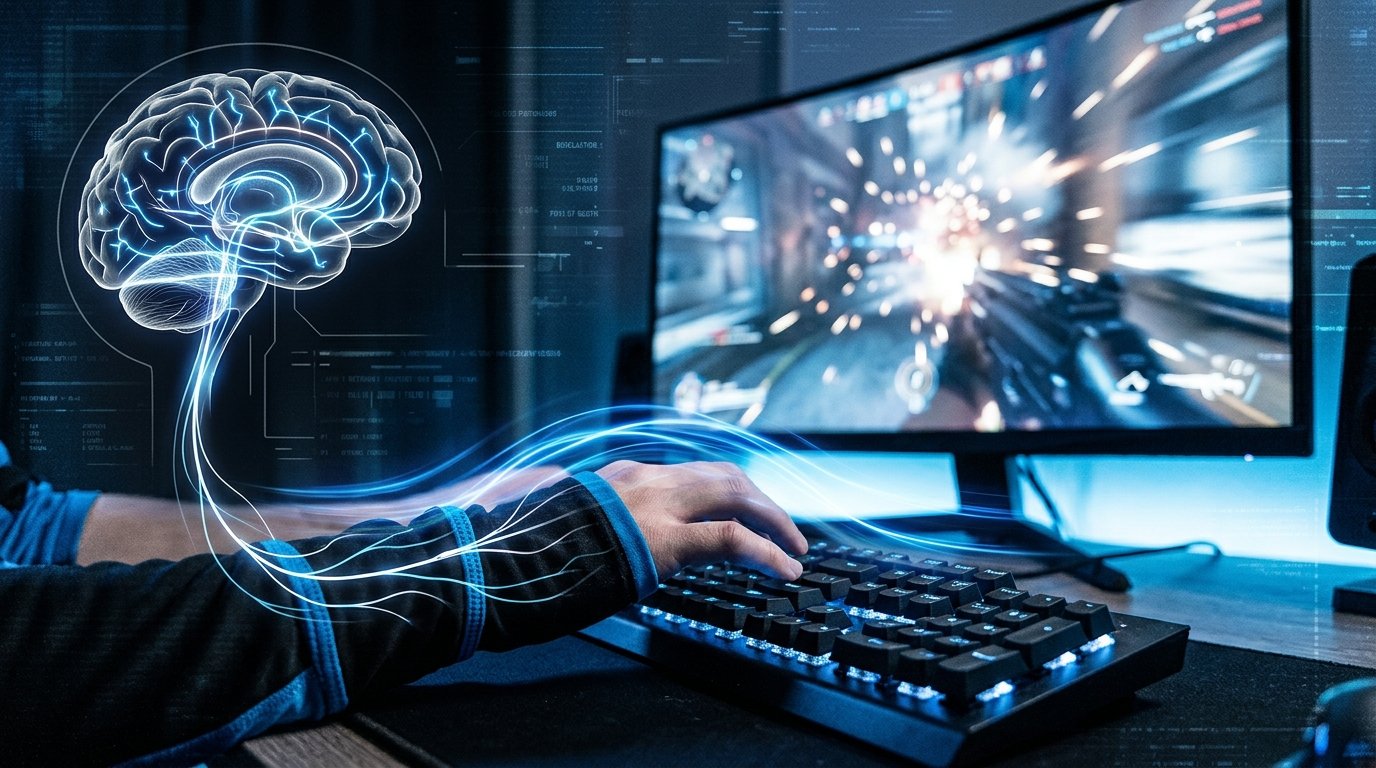
Okay, let's talk about neuroplasticity without sounding like a textbook. Basically, your brain is lazy. If you don't use a pathway, it ignores it. But if you play a fast-paced game where you have to click a target the second it appears, your brain is forced to adapt. It literally builds thicker insulation (myelin) around those nerve pathways so the signals can travel faster.
Every time you narrowly dodge a bullet in a game or perfectly time a jump, your brain goes, "Oh, we need to be able to do that faster next time." It's not just muscle memory; you are physically altering how fast your brain talks to your hands.
What Different Games Actually Do
I find it fascinating that not all games train the same things. It's like going to the gym and doing arms versus doing legs.
- The Clickers: Games where you just click stuff fast (like aim trainers). These are pure micro-muscle control. You learn exactly how far to move your wrist to hit a pixel without overshooting.
- The Runners: Think endless scrolling games. These force your eyes to smoothly track moving objects without jumping around. It sounds basic, but it helps with everything from driving to playing sports.
- The Rhythm Stuff: Anything where you have to press a button on a beat. This is all about predictive timing—your brain learning to anticipate exactly when something is going to happen and acting *before* it does.
- Bullet Hell: Those chaotic games where you're dodging a million things at once. They force you to use your peripheral vision. You're staring at your character, but you're reacting to stuff happening on the edges of the screen.
Puzzle Games vs. Pure Chaos
Look, I love a good Sudoku or a relaxing word game. They're great for keeping your memory sharp and feeling smart. But if we're talking pure physical reflexes? They do absolutely nothing.
To get faster, you need the stress of time pressure. Action games force you into a state where you have to process information in a fraction of a second. The dynamic, chaotic environment is what actually forces your brain to speed up.
Don't Overdo It, Though
Here's the catch: grinding a twitch-shooter for eight hours straight isn't making you a god of reflexes; it's just giving you eye strain and mental fatigue. Brains need breaks to actually lock in those new neural pathways.
The sweet spot? About 20 to 30 minutes of intense gameplay, a few times a week. You want to play just enough to get frustrated because you keep missing, and then walk away. Your brain does the actual upgrading while you're resting.
Yeah, the Science Backs This Up
This isn't just gamer copium. There are massive studies on this. One big one showed that action gamers make decisions 25% faster than non-gamers without losing any accuracy. That's huge! There was even a wild study showing that surgeons who played video games made way fewer errors and finished surgeries faster than those who didn't play.
Test Your Own Reflexes
Wanna see how fast your brain actually talks to your hands? Try these out. Just don't blame me if you get stuck trying to beat your high score. Speed Clicker, Whack-a-Mole, or the classic frustration of Flappy Bird.